

The 2025 Bihar Assembly Election delivered a sweeping victory for the National Democratic Alliance (NDA), marking one of the most decisive mandates in the state’s recent political history.
As results poured in, it became clear that the alliance had struck the right balance of social engineering, governance messaging, and strategic political positioning.
While many factors shaped the outcome, five core reasons clearly stood out — each playing a critical role in pushing the NDA far ahead of its rivals.
5 Important Factors Why NDA Won the Bihar Election
1. Strategic Seat Allocation Masterstroke
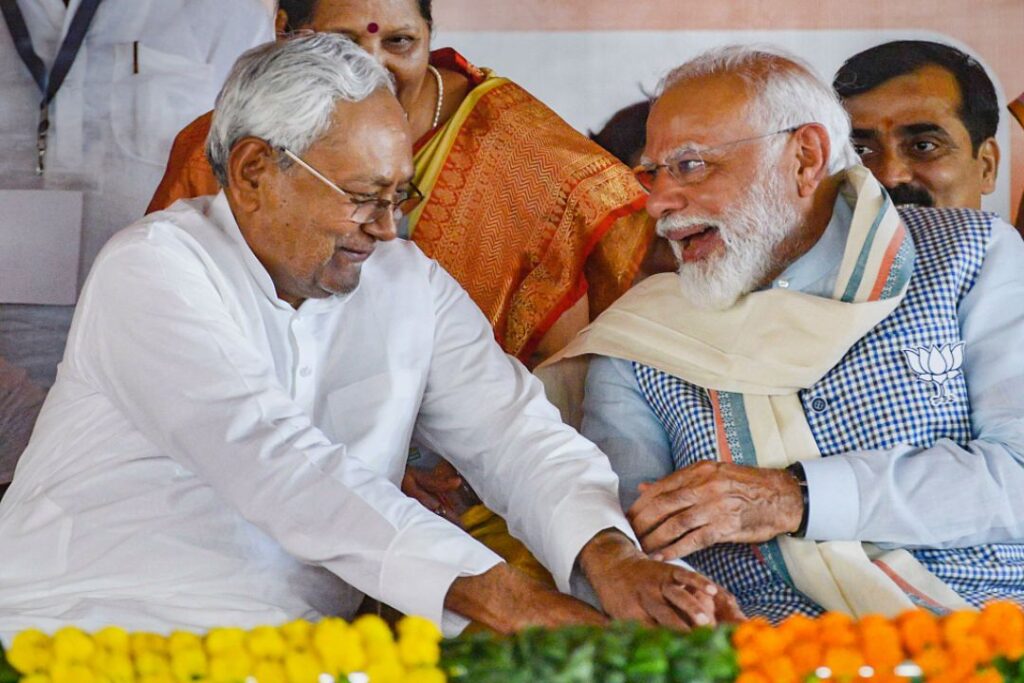
One of the biggest strengths behind the NDA’s victory was its ability to execute a seamless and conflict-free seat-sharing arrangement.
Unlike the Opposition, which struggled to manage its internal competition, the NDA distributed tickets with remarkable clarity and discipline.
The BJP, JD(U), and smaller allies maintained a unified front by avoiding overlapping claims and preventing candidate resentment — a problem that had weakened the Mahagathbandhan across several seats.
This united approach ensured that every constituency had a prepared, coordinated, and locally strong candidate, giving the alliance a clear advantage on the ground.
Political stability within the coalition translated into voter confidence, especially in regions where past elections were marked by alliance friction.
2. Reenergised Women-EBC Support Base
Bihar’s political landscape has shifted dramatically over the past decade, and the 2025 election reaffirmed this trend.
Women voters and Extremely Backward Classes (EBCs) turned out in record numbers, many of them choosing the NDA for its welfare delivery, safety-focused messaging, and targeted schemes.
Programmes related to housing, food security, health support, and women-centric financial assistance improved the NDA’s credibility among families who benefited directly from these policies.
Additionally, women voters have previously played a decisive role in Bihar elections, and 2025 was no exception.
A strong turnout, combined with perception of stability and welfare continuity, formed one of the alliance’s most reliable vote banks.
3. Caste Coalition Expanded Across Segments
Castes have always shaped electoral outcomes in Bihar, but this time the NDA’s outreach was more systematic and broad-based.
The alliance strengthened connections with OBCs, EBCs, upper castes, and key Dalit communities through a combination of local leadership empowerment and finely targeted messaging.
This widened coalition helped counter the Mahagathbandhan’s traditional Yadav-Muslim base, which failed to consolidate on the scale it anticipated.
By ensuring representation in leadership roles and maintaining a balance of caste equations in ticket distribution, the NDA managed to bring multiple social groups into a cohesive electoral umbrella.
4. Effective Campaign Themes & Opposition Missteps
The NDA ran a highly disciplined, theme-driven campaign that contrasted sharply with an opposition struggling to maintain message clarity.
The alliance emphasized governance stability, law and order improvements, and continuity in welfare schemes.
At the same time, the revival of concerns related to “Jungle Raj” resonated with sections of voters who feared a return to instability under a divided opposition.
Meanwhile, the Mahagathbandhan faced leadership disconnect, poor coordination, and inability to expand beyond its core vote bank.
Voter fatigue, mixed signals, and lack of a united narrative weakened the opposition’s ability to pose a serious challenge.
5. Nitish Kumar’s Stability Image Reasserted
Despite political shifts over the years, Nitish Kumar remains a significant figure in Bihar politics. In 2025, his administrative reputation, welfare-focused leadership, and appeal among women and EBC voters helped revive the JD(U)’s standing.
His partnership with the BJP brought a perception of experienced, balanced governance — a combination many voters believed would ensure policy stability and prevent political chaos.
Nitish’s repositioning in the NDA also reassured moderate voters who were unsure about the opposition’s leadership structure.
Conclusion
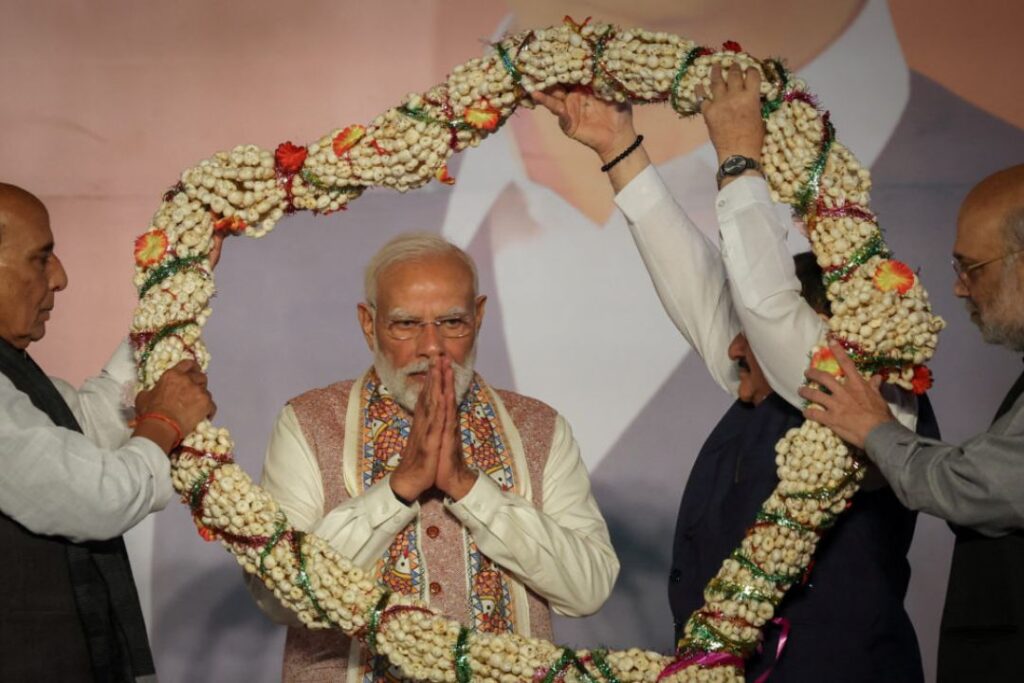
The NDA’s historic victory in Bihar was not the result of a single factor but a combination of strategic planning, social outreach, voter-friendly governance messaging, and opposition weaknesses.
From disciplined seat-sharing to strong women–EBC support, expanded caste alliances, effective campaigning, and Nitish Kumar’s enduring credibility — each element played a pivotal role in shaping the 2025 mandate.
Stay updated with in-depth articles, election analysis, and unbiased political coverage. Follow Loktantra for everything you need to understand Indian politics better.