
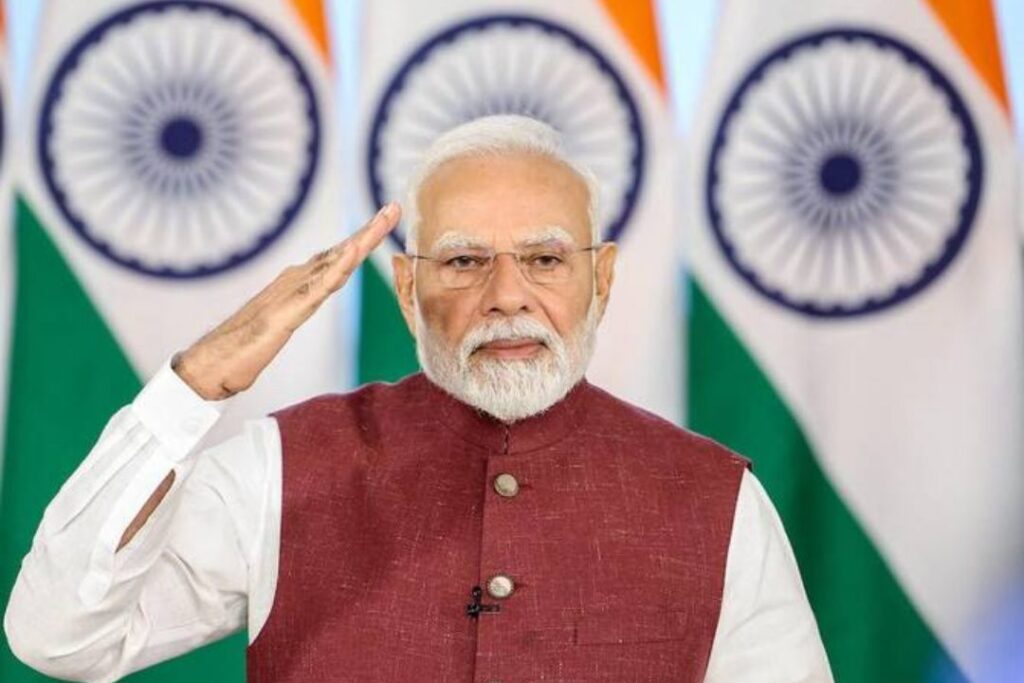
Narendra Modi, the 14th Prime Minister of India, is one of the most influential and debated political figures of modern India. His journey—from a modest childhood in Gujarat to becoming the face of India on the global stage—reflects determination, discipline, and a vision that transformed the country’s political landscape.
Early Life and Foundations
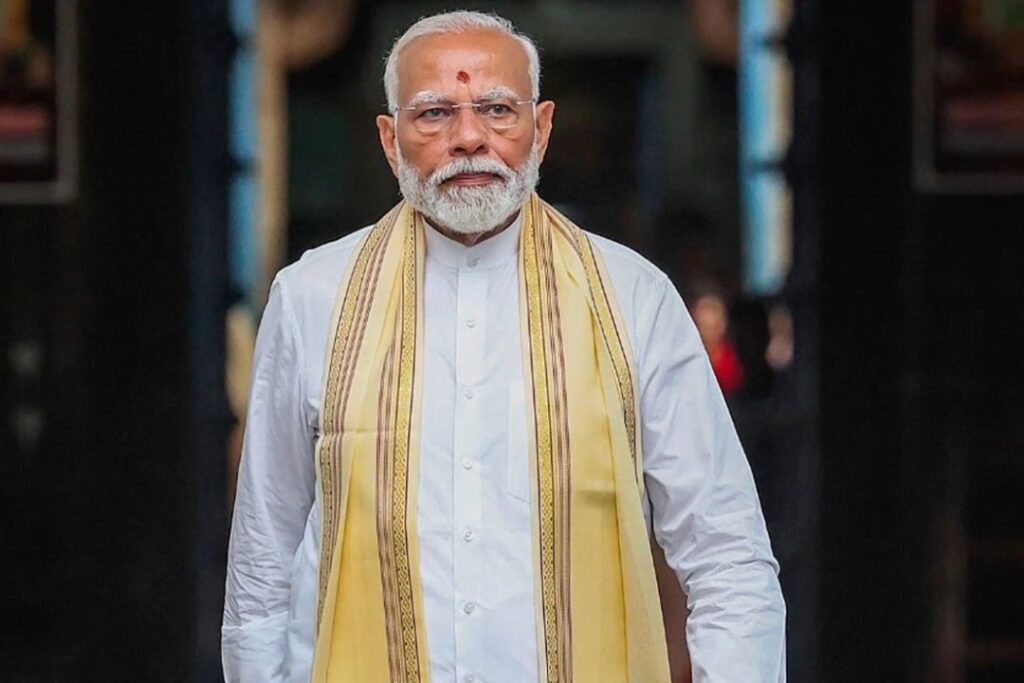
Narendra Damodardas Modi was born on 17 September 1950 in Vadnagar, Gujarat. Raised in a humble family, Modi’s early years were marked by simplicity and hard work.
He often helped his family with small jobs, which shaped his understanding of common people and their day-to-day struggles.
As a young boy, Modi developed a deep interest in national issues and community service.
This interest eventually drew him towards the Rashtriya Swayamsevak Sangh (RSS), where he learned organisational discipline and leadership—skills that later became central to his political journey.
Entry Into Politics
Modi’s association with the RSS gradually led him to the Bharatiya Janata Party (BJP). Known for his dedication and efficiency, he quickly rose through the party ranks.
In 2001, he became the Chief Minister of Gujarat, a position that brought him national attention.
During his tenure, Gujarat saw major infrastructure projects, industrial expansion, and economic growth.
However, his leadership also faced criticism, particularly after the 2002 Gujarat riots. Despite controversies, Modi continued to gain strong political support across the state.
Becoming the Prime Minister
In 2014, Narendra Modi led the BJP to a historic victory with a strong development-centric campaign. His vision promised economic growth, better governance, and a modern, self-reliant India.
He captured the imagination of millions, especially the youth, who saw him as a leader capable of delivering change.
As Prime Minister, Modi introduced several major national programmes: Digital India – promoting technology, digital payments, and online government services; Swachh Bharat Mission – a large-scale cleanliness and sanitation drive; Make in India – aimed at boosting manufacturing and generating employment; GST – establishing a unified tax system; Ayushman Bharat – providing large-scale health insurance support.
He was re-elected in 2019 with an even bigger mandate, reflecting widespread public support.
Leadership Style and Vision
Modi is known for his strong communication skills and strategic political approach. His speeches, social media presence, and ability to connect with large audiences have shaped his public image.
Internationally, he positioned India as a rising global power. His foreign policy—focused on partnerships, diplomacy, and national security—helped India gain greater influence on the world stage.
Challenges and Criticism
While Modi remains highly popular, he has faced criticism on various fronts: concerns about social harmony, debates over economic performance, and discussions around centralisation of political power. Despite differing opinions, his impact on India’s direction is undeniable.
Personal Life
Modi’s personal life is described as disciplined and minimalist. His early marriage did not continue, as he chose a life devoted to public service. He often highlights yoga, culture, and national pride as essential elements of his lifestyle.
Conclusion

Narendra Modi’s journey is a remarkable story of ambition, resilience, and transformation. Whether admired or criticised, his influence on India is unmistakable. He reshaped governance, modernised political communication, and emerged as a defining leader of contemporary India.
Follow Loktantra for in-depth biographies, credible news, and insightful history updates.