
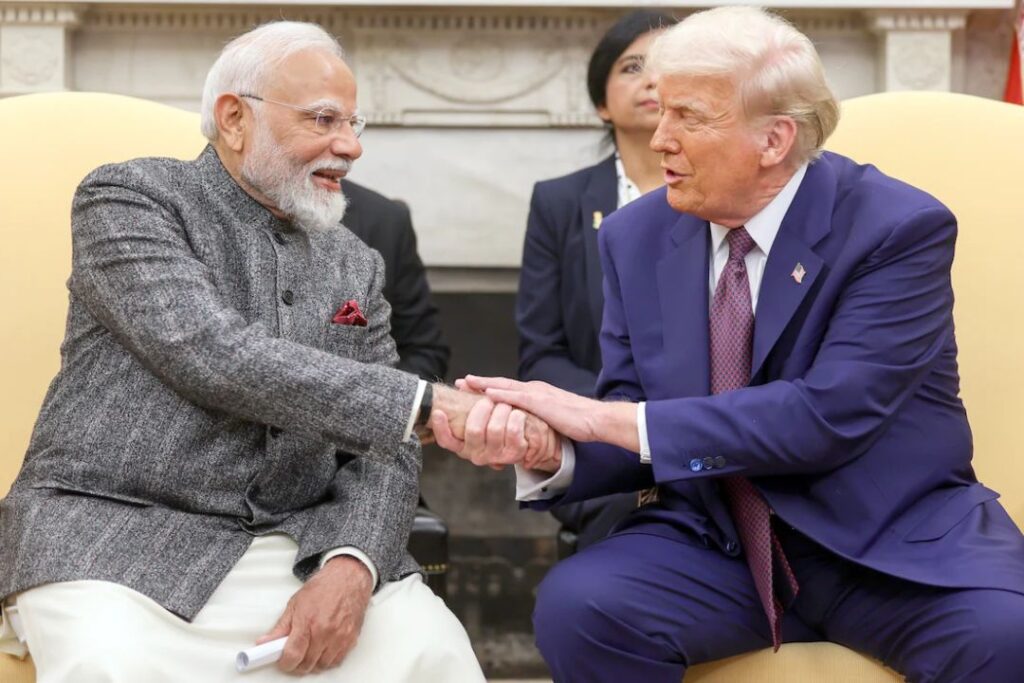
India-United States Relation
The relationship between India and the United States is based on shared democratic values and common strategic interests.
This partnership has evolved from conflict to one of the most dynamic and important alliances of the 21st century.
It covers a wide range of areas, including defense, technology, trade, cybersecurity, and global governance.
As both nations face a quickly changing geopolitical landscape, they work together on issues like counterbalancing China, ensuring free access to the Indo-Pacific region, and committing to cooperation and progress. Their ties reflect a focus on practicality and an ongoing dedication to collaboration.
This article explores the evolution of India-US relations, outlines specific areas of cooperation, highlights conflicts of interest, and discusses the path ahead.
The Pivot to Partnership: Three Phases That Defined India-US Diplomacy
1. The Cold War Era (1947–Early 1990s): Estranged Democracies
- Non-Alignment vs. Alliances: After gaining independence, India followed a policy of non-alignment, trying to stay away from both the U.S.-led and Soviet-led blocs. The U.S., however, viewed the world through a Cold War perspective and formed a strong strategic and military alliance with Pakistan, India’s regional rival.
- Lowest Point: This alignment brought significant tensions. U.S. support for Pakistan during the 1971 Indo-Pakistani War deeply affected Indian feelings. In response, India strengthened its ties with the Soviet Union for defense and economic aid.
- Pokhran-I (Smiling Buddha): India conducted its first nuclear test, which led the U.S. to impose sanctions and sparked the nuclear non-proliferation issue that would strain relations for decades.
2. The Post-Cold War Rapprochement (1991–2000): Economic & Geopolitical Shift
- Economic Liberalization & Soviet Collapse (1991): The fall of the Soviet Union forced India to rethink its foreign policy and economic model. India began major economic reforms that opened its market to global investment, raising U.S. economic interest.
- Pokhran-II (1998): India carried out a series of nuclear tests. Under President Clinton, the U.S. imposed heavy sanctions due to the 1994 Nuclear Proliferation Prevention Act, resulting in a sharp decline in relations.
- Kargil War (1999): The U.S. played a key role in pressuring Pakistan to withdraw its forces, which improved strategic dialogue and led to a relaxation of U.S. sanctions later that year.
- Clinton’s Visit (2000): Turning Point: President Bill Clinton’s historic visit to India marked a commitment to re-engage with India as a rising power, shifting the relationship from transactional to strategic.
3. Strategic Partnership and Convergence (2001–Present): Shared Security & Economic Interests
- Counter-Terrorism Cooperation (Post-9/11): The global War on Terror created a shared security agenda and significantly enhanced intelligence and defense cooperation.
- New Framework for India-US Defense Relations (2005): Signed by Prime Minister Manmohan Singh and President George W. Bush, this agreement formalized and expanded defense cooperation, joint exercises, and technology transfer.
- India-US Civil Nuclear Agreement (2008): This agreement was a key breakthrough, giving India access to civil nuclear technology even though it is not a signatory to the NPT. It solidified India’s status as a responsible nuclear power and a reliable strategic partner.
- Major Defense Partner & Foundational Pacts (2016–Present): The U.S. designated India as a ‘Major Defense Partner,’ speeding up technology sharing. India has signed three of the four key foundational defense agreements (LEMOA, COMCASA, BECA), greatly improving military interoperability.
- The Indo-Pacific Focus & QUAD (2017–Present): The partnership has increasingly focused on the Indo-Pacific region. India, the U.S., Japan, and Australia formalized the Quadrilateral Security Dialogue (QUAD), addressing shared concerns about regional stability and maritime security, mainly in response to China’s growing influence.
- iCET (2023) Initiative: The launch of the Initiative on Critical and Emerging Technology expands cooperation into future-focused areas such as semiconductors, AI, space, and defense manufacturing, strengthening the high-tech and strategic future of the relationship.
4. Bridging Oceans: How India and the U.S. Strengthened Defence to Technology Ties (2002–2024)
Below are selected major domains across defence, trade/technology, energy/climate, and security.
India has been designated a “Major Defense Partner” of the United States, which allows it to access more U.S. defense technology and co-produce with the U.S.Joint military exercises: e.g., Malabar (naval) began 1992 and expanded to include the U.S, India, Japan (and later Australia).
Major agreements of LEMOA (2016), COMCASA (2018), BECA (2020).Co-production and defence industry cooperation under INDUS-X launched in 2023.Details are discussed with timeline:
- 2002
Defence & Security: Both states signed the General Security of Military Information Agreement (GSOMIA) for sharing defence information.
- 2005
Civil Nuclear: 18 July jointly announced the U.S.–India Civil Nuclear Agreement (the 123 Agreement) .
- 2016
Defence & Logistics: The Logistics Exchange Memorandum of Agreement (LEMOA) was signed, enhancing logistics support between Indian & U.S. militaries.
- 2018
Defence Communications: The Communications Compatibility and Security Agreement (COMCASA) was signed, for securing communications cooperation.
- 2020
Geospatial Intelligence: The Basic Exchange and Cooperation Agreement (BECA) was signed, allowing exchange of geospatial data.
- April 2021
Energy & Climate: India and the U.S. launched the India‑U.S. Climate and Clean Energy Agenda 2030 Partnership.
- May 2022
Trade/Framework: India joined the Indo‑Pacific Economic Framework for Prosperity (IPEF) (with U.S. as a key member) in May 2022.
- Jan 2023
Technology: The Initiative on Critical and Emerging Technology (iCET) was launched to develop cooperation in quantum technologies, semiconductors, AI, .
- June 2023
Defence-Industry Collaboration: The launch of the INDUS‑X (India‑U.S. Defence Acceleration Ecosystem), a mechanism to accelerate co-production and innovation in defence technologies.
- October 2024
Defence Sale & Technology Transfer: India and U.S. signed an agreement for the acquisition of MQ-9B Reaper drones and related equipment (defence/logistics)
5. The Many Fault Lines in India–US Ties
India and the United States, cooperation in areas like commerce, defense, and technology, continue to experience significant but also there are multifaceted areas of conflict that affect the trajectory of their bilateral relationship. Numerous persistent issues—ranging from trade disputes, defense purchases, diplomatic differences, and technology regulation to domestic policy clashes and strategic divergences—have become especially pronounced in 2025 under recent policy shifts and global developments.
Major Trade Disputes
Trade has been a consistent area of disagreement between India and the US.
The US has often criticized India for:
- High tariffs on American products
- Restrictions on foreign investment
- Broader protectionist economic policies
The Trump administration (in 2025) imposed 50% tariffs on most Indian exports to the US — one of the steepest for any major trading partner.The tariffs mainly impacted textiles, jewelry, leather, chemicals, and marine goods.
The US cited reasons such as:
A. The need for “reciprocal treatment” in trade
B. Concerns over India’s continued energy imports from Russia
India condemned the tariffs as “unfair, unjustified, and unreasonable.”The tariffs affect over half of India’s $87 billion annual exports to the US. Expected to reduce India’s GDP by 0.3–0.5% in 2025India was removed from the US Generalized System of Preferences (GSP) in 2019.Ongoing disputes continue over market access for agricultural and dairy products.
6. Defense Procurement and Strategic Divergence
Defense procurement and strategic alignment remain major points of friction between India and the US. India’s continued dependence on Russian military hardware** raises doubts about secure interoperability. The purchase of S-400 missile systems is a particular source of tension.
The S-400 deal potentially violates the US Countering America’s Adversaries Through Sanctions Act (CAATSA).Trump administration connected further tariff hikes to India’s ongoing oil imports from Russia, worsening bilateral tensions.
India’s Stand: India insists on maintaining “strategic autonomy” and refuses to reduce its defense or energy ties with Russia.
Impacts :
- This divergence has led to a trust deficit in defense cooperation.
- It has also slowed technology transfers and joint defense projects between the two nations.
7. Technology, Data, and E-Commerce Policy Conflicts
The rise of the digital economy has introduced tensions over data localization, cybersecurity, and e-commerce regulations. The US criticizes India’s data localization rules and draft e-commerce laws as discriminatory. Washington argues these measures violate global best practices and limit market access for American tech giants.
India’s steps: India’s approach is guided by national security and digital sovereignty concerns. It seeks strict privacy laws and greater control over domestic data.
Result: Persistent disagreements on data transfer frameworks and digital trade regulations between both countries.
8. Human Rights, Democracy, and Internal Security
Issues of democracy, civil liberties, and internal governance sometimes spark tensions. The US has raised concerns over press freedom, political arrests, and election transparency in India.
- India’s response: India rejects these remarks as interference in internal affairs and defends its democratic integrity. The case of pro-Khalistani activist Gurpatwant Singh Pannun has worsened tensions.
Allegations of an assassination plot involving Indian officials have prompted US demands for accountability and increased scrutiny of India’s internal security practices.
9. Quad and Geopolitical Alignment
India and the US are key members of the Quadrilateral Security Dialogue (Quad), along with Japan and Australia. India continues to balance ties with BRICS members and Russia, creating complexity in alignment.
- US concerns:
Some American analysts fear that excessive trade and defense pressure could push India closer to China and Russia.
- Way forward:
Experts emphasize the need for high-level diplomacy to:
- Resolve bilateral frictions.
- Preserve the India–US partnership.
- Strengthen regional stability through effective Quad cooperation.
Final Thoughts
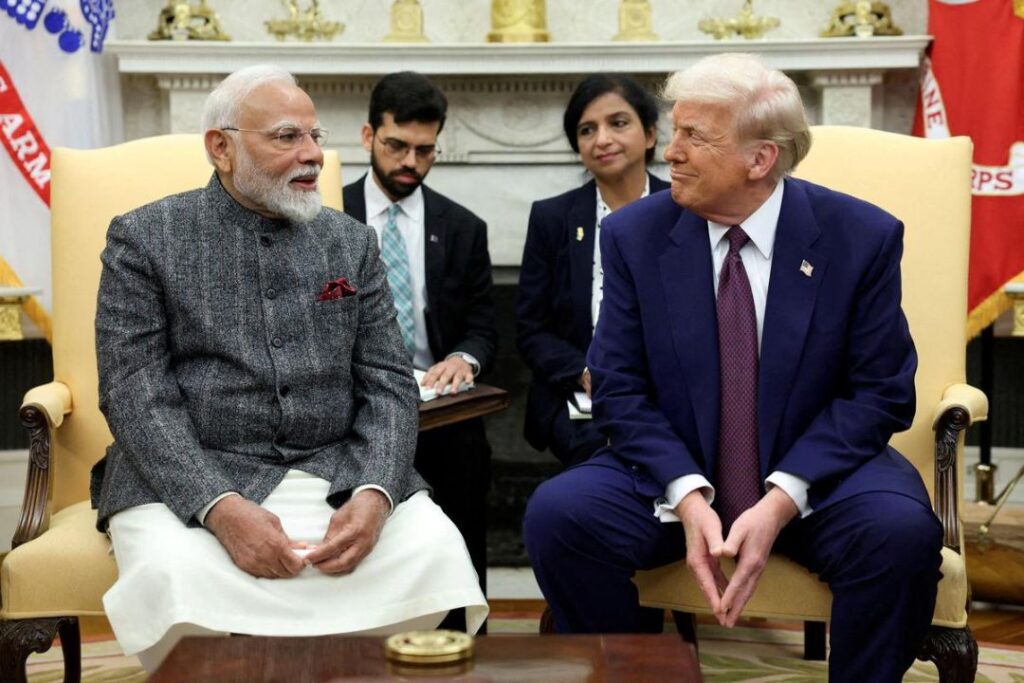
The India–U.S. relationship has come a long way — from Cold War estrangement to a multifaceted strategic partnership built on trust, technology, and shared democratic ideals.
While differences over trade, defense procurement, and human rights remain, both nations recognize that their collaboration is vital for maintaining global balance and ensuring stability in the Indo-Pacific region.
As the world continues to evolve, the strength of India–U.S. ties will depend on how both nations manage their differences and build upon their common goals of security, growth, and innovation.
For more insightful analyses on global relations and strategic partnerships, Follow Us for the latest updates and in-depth international stories.