

Introduction
India and the United States relations are at their lowest point in the past two decades. Yet, amid this phase of divergence, a new horizon of convergence has emerged as both nations take a major step forward in their defence partnership.
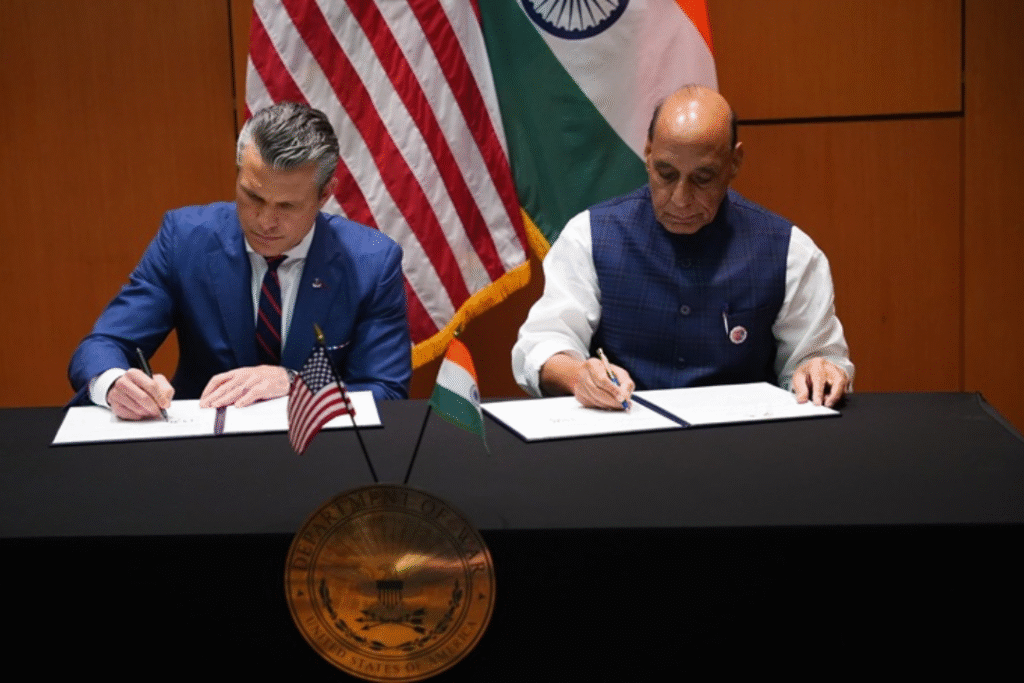
Both countries signed a new 10-year framework agreement (2025–2035) during the 12TH ASEAN Defence Ministers’ Meeting-Plus (ADMM-Plus) in Kuala Lumpur.
Indian Defence Minister Rajnath Singh and his US counterpart Pete Hegseth signed the “Framework for the U.S.–India Major Defence Partnership”, marking a milestone in bilateral relations with a clear vision for long-term cooperation.
This agreement provides a carves comprehensive roadmap to deepen collaboration in key areas —
1. Defence procurement
2. Technology transfer
3. Joint exercises,
4. Industrial manufacturing
5. Information sharing
6. Logistics,
It is designed to move beyond individual defence deals .
Build a sustainable and predictable partnership that will shape regional stability in the Indo-Pacific.
What can be expected from this decade long agreement?
Focus on Technology and Industrial Cooperation:
- Joint technological development and industrial collaboration between India and the United States.
- Expand co-production and co-development projects in India under the “Make in India” initiative.
- Strengthens India’s defence manufacturing base while creating new avenues for US defence companies to partner with Indian industries in producing advanced military equipment.
Reciprocal Defence Procurement (RDP) Agreement:
- Streamline defence acquisition procedures.
- Align procurement systems and facilitate smoother, more transparent defence trade between both countries.
Review of US ITAR Regulations:
- Plans to review the US International Traffic in Arms Regulations (ITAR).
- Make it easier for India to obtain advanced American defence technologies.
- Areas of benefit include drones, jet engine technology, and maritime security systems, boosting India’s defence modernization.
Joint Training and Military Interoperability:
Operational Interoperability :
Bilateral Exercises: Yudh Abhyas (Army), Vajra Prahar (Special Forces), Cope India (Air Force).
Multilateral Exercises: Malabar (navies of India, USA, Japan, Australia).
- Above joint military training leads to enhanced operational coordination through expanded scope and frequency.
Ensuring accessibility to Indo-Pacific Vision:
- The defence cooperation reflects a common strategic goal of maintaining a free, open, and secure Indo-Pacific region.
- It highlights the growing strategic alignment between India and the United States amid global geopolitical challenges.
Final Thoughts
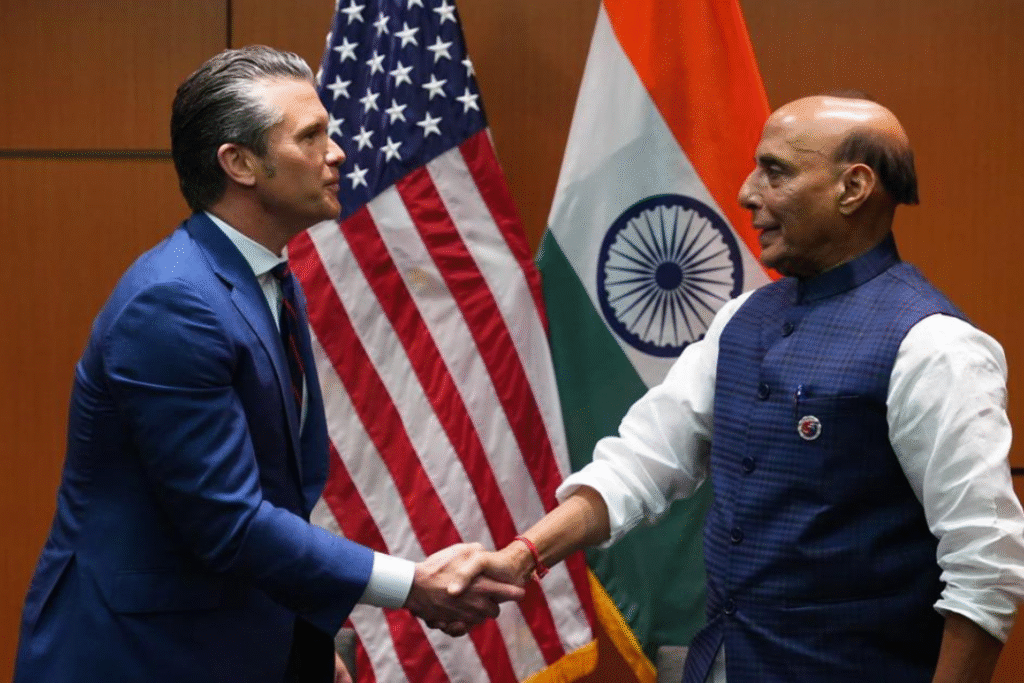
The India–US defence partnership marks a defining moment in global strategic cooperation. With a focus on technology transfer, joint production, and operational synergy, this decade-long agreement aims to strengthen regional stability and self-reliance.
As both nations align their defence priorities, the Indo-Pacific is set to witness a new phase of balance and collaboration.
Follow our website for more updates on global defence and international relations.