
Introduction
India’s independence was not achieved in a single moment — it was the result of centuries of struggle, resistance, and sacrifice. From early revolts to mass movements, from revolutionary fighters to peaceful satyagrahis, every chapter played a crucial role in shaping the free India we know today.
The story of India’s independence is a story of hope, courage, unity, and unwavering determination.
The Beginning: Seeds of Resistance
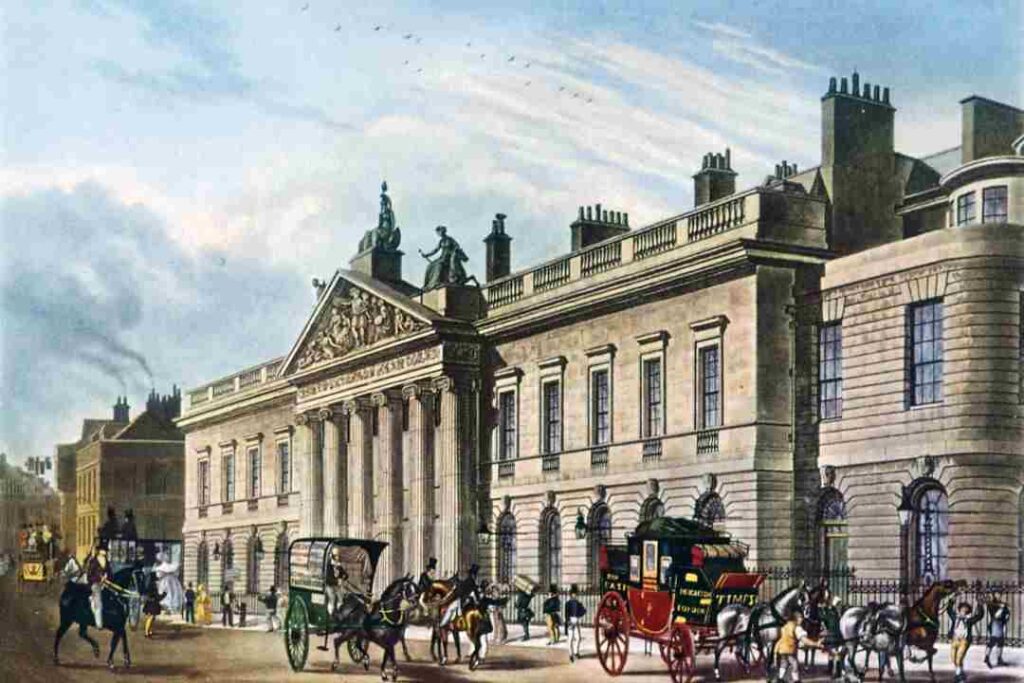
British control in India began in the 1700s through the East India Company, which gradually extended its influence across the subcontinent. By the mid-19th century, Indians had grown tired of economic exploitation, unfair taxation, and political oppression. This discontent culminated in the Revolt of 1857, also known as India’s First War of Independence.
Although the revolt was eventually suppressed, it ignited the spirit of resistance across India. Leaders, intellectuals, and common citizens alike began to dream of a nation free from foreign domination. This revolt, though unsuccessful in immediate terms, planted the seeds for a more organized and determined struggle in the decades to come.
Rise of Nationalism
By the early 20th century, the idea of nationalism was spreading rapidly across India. Movements like Swadeshi, which encouraged Indians to boycott British goods and support local industries, helped develop self-reliance and economic independence.
The Indian National Congress (INC), founded in 1885, gradually became the central voice of the freedom struggle. Initially, Congress aimed for reforms and partial autonomy, but growing frustrations led to a demand for full independence.
In December 1929, the INC made a historic declaration — India now aimed for Purna Swaraj, or complete independence. This marked a turning point in Indian history.
No longer would Indians accept mere reforms; they demanded total liberation from British rule. This resolution ignited widespread mobilization, inspiring millions to actively participate in the independence movement.
Gandhi & the Power of Non-Violence
Mahatma Gandhi transformed India’s struggle for freedom through the philosophy of non-violent resistance, known as Satyagraha. His approach combined moral courage with civil disobedience, and it became the guiding principle of India’s fight for independence. Gandhi believed that non-violence was not just a strategy, but a moral imperative.
Some of the major movements led by Gandhi include:
- Non-Cooperation Movement (1920): Indians refused to cooperate with British authorities, boycotted schools, courts, and products, and began promoting indigenous goods.
- Civil Disobedience & Salt March (1930): Gandhi led a 240-mile march to the Arabian Sea to produce salt, directly defying British monopoly laws. Millions joined in acts of civil disobedience across India.
- Quit India Movement (1942): Gandhi called for the immediate end of British rule with the famous slogan “Do or Die.” The movement involved mass protests, strikes, and acts of civil disobedience across the nation.
These movements united people from all walks of life — peasants, workers, students, and leaders — creating unprecedented national solidarity. Despite arrests, crackdowns, and violent reprisals, the spirit of resistance could not be broken.
The Role of Revolutionaries
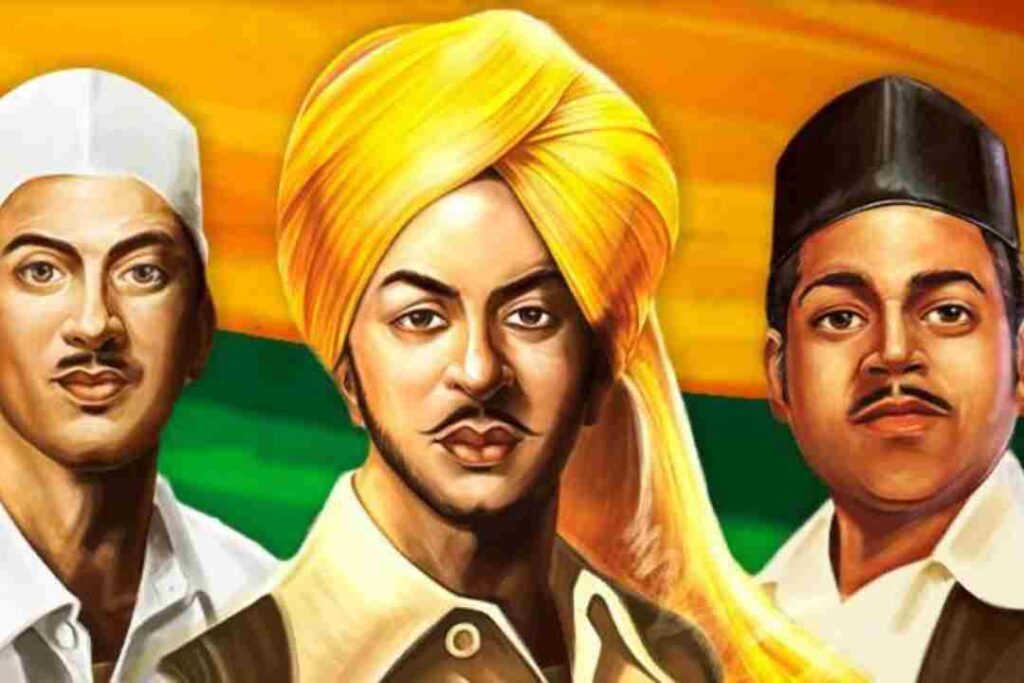
Alongside non-violent movements, many revolutionaries fought bravely against British rule, often at the cost of their lives. Leaders like Bhagat Singh, Rajguru, Sukhdev, Chandrashekhar Azad, and others became symbols of courage and sacrifice.
Their aim was to awaken national consciousness and show that India would not bow to foreign rulers. While Gandhi’s strategy emphasized moral pressure, revolutionaries believed in direct action to challenge British authority. Both approaches together strengthened India’s fight for freedom.
Subhas Chandra Bose & Azad Hind Fauj
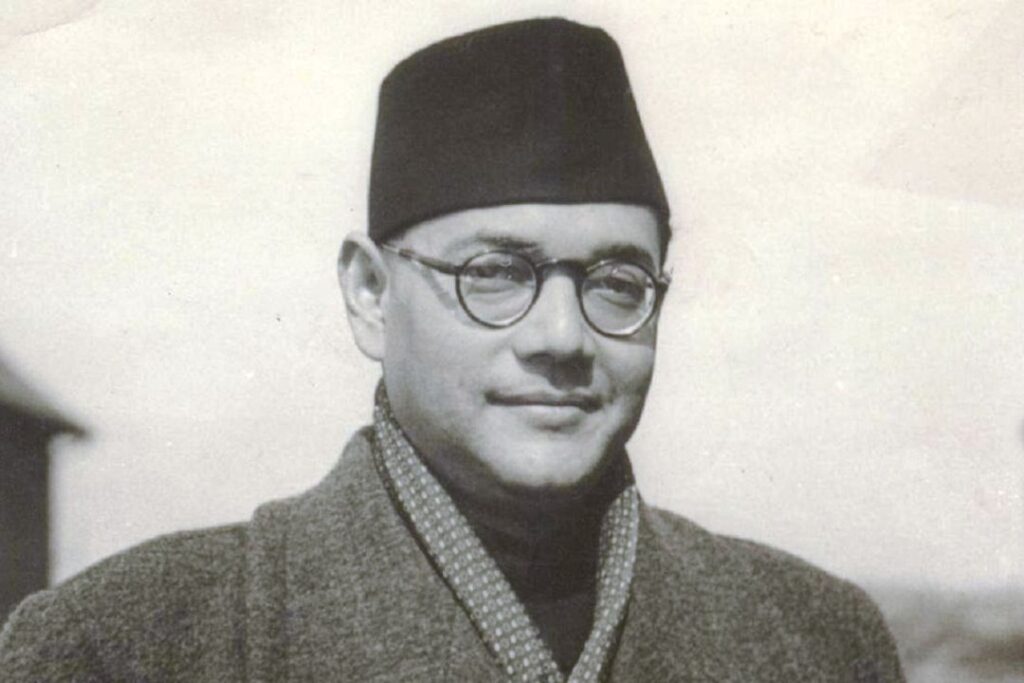
A crucial chapter in India’s independence struggle was led by Subhas Chandra Bose, popularly known as Netaji. Frustrated with the slow progress of non-violent movements and British intransigence, Bose sought a more aggressive approach to liberate India. He believed that freedom could be achieved sooner if Indians directly challenged the British militarily.
During World War II, Bose escaped house arrest in India and traveled to Germany and later Japan to seek support for Indian independence.
With Japanese assistance, he formed the Azad Hind Fauj (Indian National Army) in 1942, comprised of Indian prisoners of war and volunteers from Southeast Asia.
The Azad Hind Fauj had a clear mission: to fight alongside Axis powers and liberate India from British rule. Under Bose’s leadership, the army fought bravely in campaigns in Burma and northeastern India, instilling pride and courage among Indians.
Although the INA could not achieve military victory, its existence inspired millions and left an indelible mark on India’s independence movement.
Bose’s call, “Give me blood, and I will give you freedom,” became legendary, inspiring both soldiers and civilians. His vision united Indians across borders, religions, and regions in the shared dream of freedom.
World War II and Changing Circumstances
The outbreak of World War II in 1939 changed global dynamics. Britain was heavily involved in the war effort, and its resources were stretched thin. Indian leaders demanded greater autonomy in exchange for support in the war.
The Cripps Mission of 1942 failed to meet Indian aspirations, and this led to the launch of the Quit India Movement, intensifying the demand for complete independence.
The war weakened Britain economically and politically, making it increasingly difficult to maintain control over colonies like India. The combination of internal pressure, mass movements, revolutionary efforts, and global circumstances created the perfect opportunity for India to demand freedom.
Partition and the Birth of Two Nations
India’s independence came with both joy and sorrow. Religious tensions, particularly between Hindus and Muslims, had intensified over the decades. The demand for a separate Muslim nation, championed by the Muslim League under Muhammad Ali Jinnah, led to the plan for partition.
The Indian Independence Act of 1947, passed by the British Parliament on 18 July 1947, paved the way for the creation of two independent nations: India and Pakistan. On 15 August 1947, India finally achieved freedom.
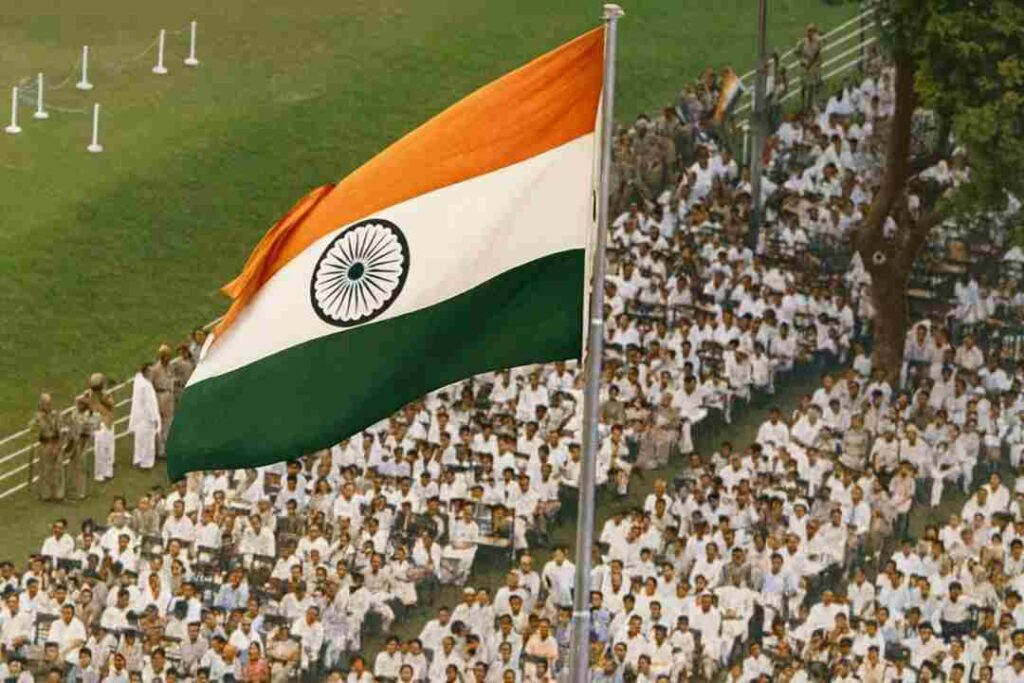
The Union Jack was lowered, and the tricolour flag was hoisted. Jawaharlal Nehru, India’s first Prime Minister, delivered his historic “Tryst with Destiny” speech, capturing the emotion and magnitude of the moment.
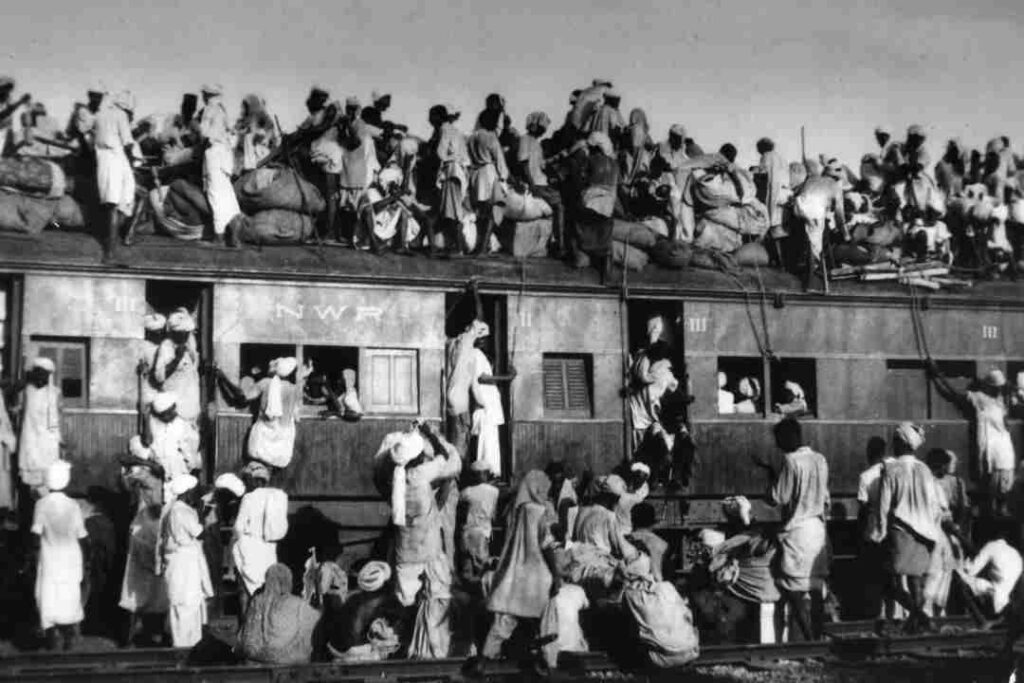
However, the independence of India came at a heavy cost. Partition triggered mass migrations and communal violence, displacing millions of people and resulting in the deaths of hundreds of thousands. Families were torn apart, cities and villages were left in turmoil, and the joy of independence was bittersweet.
1950: India Becomes a Republic
Independence was a crucial step, but India became a fully sovereign republic on 26 January 1950, when the Constitution of India came into effect. This transformed India from a dominion within the British Commonwealth into a completely self-governing nation. The Constitution enshrined principles of democracy, equality, and justice, fulfilling the vision of the freedom fighters who had sacrificed their lives for the nation.
Why This History Still Matters?
India’s independence is more than just a historical event. It is a reminder of the power of unity, courage, and resilience. Freedom was hard-earned through struggle and sacrifice, and maintaining it requires constant vigilance, responsibility, and respect for democratic values.
The story of independence teaches us that:
- Unity is strength: Millions of Indians from diverse backgrounds came together for a common cause.
- Non-violence can be powerful: Gandhi’s philosophy showed that moral courage can challenge even the strongest empires.
- Sacrifice must be honored: The bravery of revolutionaries, the INA, leaders, and common citizens created the foundation for modern India.
- Freedom is a responsibility: Independence is not just a date to celebrate — it is a value to uphold every day through action, ethics, and national pride.
Final Thoughts
India’s journey to independence is a story of hope, courage, and relentless struggle. It reminds us that ordinary people, when united by purpose, can change the course of history. The fight for freedom was long and often painful, but it gave birth to a nation that continues to strive toward democracy, justice, and equality.
Every Indian owes a debt of gratitude to the countless men and women who made independence possible. Celebrating freedom means remembering their sacrifices and contributing to the growth, unity, and prosperity of the nation. The legacy of the Azad Hind Fauj and Subhas Chandra Bose continues to inspire patriotism and courage across generations.
India’s independence is not just a memory; it is a living legacy — one that inspires, teaches, and empowers generations to come.
Explore more stories of courage, history, and inspiration. Stay connected to learn about the events and people that shaped our world, and discover lessons that continue to guide us today.