

1. Introduction
Chhatrapati Shivaji Maharaj, also known as Shivaji Bhonsale I, was one of India’s greatest warrior kings and the founder of the Maratha Empire.
Through his vision, courage, and administrative genius, he carved out an independent kingdom from the declining Adilshahi Sultanate of Bijapur.
His leadership not only transformed the political landscape of western India but also laid the foundation for a powerful Maratha state that would later challenge Mughal supremacy. Shivaji Maharaj’s life is remembered as a symbol of self-rule, valor, and good governance.
2. Early Life
Chhatrapati Shivaji Maharaj was born on 19 February 1630 at the hill fort of Shivneri near Junnar in present-day Pune district. He was named after the local goddess Shivai, whom his mother Jijabai worshipped.
His father, Shahaji Bhonsle, was a Maratha general who served various Deccan sultanates, while his mother Jijabai was a deeply religious and strong-willed woman from the Jadhav family of Sindhkhed.
Shivaji spent his childhood amidst the rugged hills and forts of the Deccan, where he learned the art of warfare and administration. Jijabai instilled in him a sense of pride in his heritage and devotion to justice and righteousness. These early influences shaped his vision of an independent Maratha kingdom.
3. Political Context of the Deccan
During Shivaji’s early years, the Deccan region was divided among three major Muslim powers: the Sultanates of Bijapur, Ahmadnagar, and Golkonda. The Mughal Empire was also expanding southward under Emperor Shah Jahan and his son Aurangzeb.
Shahaji Bhonsle, Shivaji’s father, served these powers at different times, seeking to maintain his jagir and army in turbulent political conditions.
This complex environment of alliances and conflicts provided young Shivaji with valuable insights into statecraft and military strategy.
4. Rise of Shivaji Maharaj+
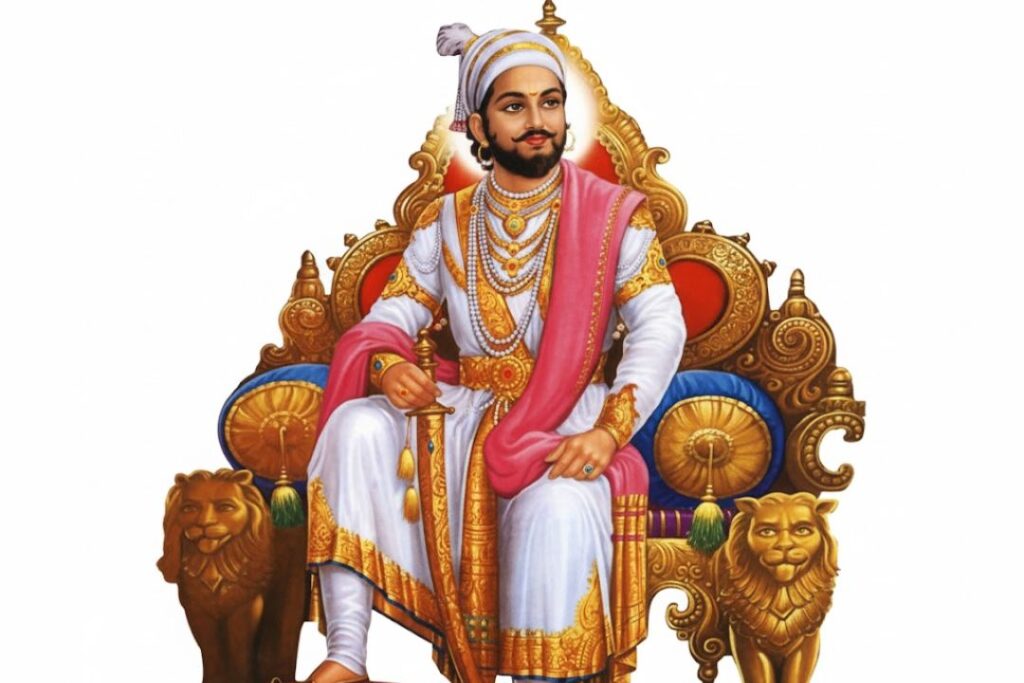
At the young age of sixteen, Shivaji Maharaj captured the Torna Fort in 1646, marking the beginning of his independent rule. Using the treasure found there, he built the Rajgad Fort, which became his first capital.
Over the next few years, he seized several important forts near Pune, including Purandar, Kondhana, and Chakan. Shivaji’s military strategies relied heavily on speed, surprise, and deep knowledge of terrain—tactics that would later be recognized as guerrilla warfare.
His administration was marked by direct communication with village leaders, bypassing local chiefs to ensure loyalty and efficiency. These early victories established him as a rising power in the Deccan.
5. Major Conflicts
(a) Conflict with the Bijapur Sultanate
Shivaji’s growing power alarmed the Bijapur Sultanate. In 1648, the Sultan ordered Shahaji’s arrest to control Shivaji’s ambitions. After Shahaji’s release in 1649, Shivaji consolidated his territories quietly before resuming expansion.
In 1656, he captured the Javali Valley by defeating the local Maratha chief Chandrarao More, strengthening his control over western Maharashtra.
(b) Conflict with the Mughal Empire
Initially, Shivaji maintained friendly ties with the Mughals, even offering assistance to Aurangzeb during his Deccan campaigns.
However, when his offers were ignored and Mughal officers attacked his territories, hostilities broke out. Between 1657 and 1665, a series of raids and battles followed.
The Mughals, under Aurangzeb’s general Mirza Raja Jai Singh I, eventually besieged Purandar Fort, forcing Shivaji to sign the Treaty of Purandar in 1665. Under this treaty, Shivaji surrendered 23 forts, retained 12, and agreed to serve as a Mughal vassal.
However, the peace was short-lived, and Shivaji soon resumed his struggle for independence.
6. The Battle of Pavan Khind
One of the most celebrated episodes in Maratha history is the Battle of Pavan Khind (1660).
As Shivaji was being pursued by Bijapuri forces led by Siddi Masud, his commander Baji Prabhu Deshpande made a heroic last stand at the narrow pass of Pavan Khind near Vishalgad Fort.
Despite heavy losses, Baji Prabhu’s sacrifice ensured Shivaji’s safe escape. The battle became legendary as a symbol of loyalty and bravery in Maratha folklore.
7. Coronation at Raigad (1674)
By the early 1670s, Shivaji had expanded his control over large parts of Maharashtra and the Konkan region. To legitimize his authority, he decided to be formally crowned as king. On 6 June 1674, at Raigad Fort, a grand coronation ceremony was held under the guidance of the learned priest Gaga Bhatt.
Sacred waters from the seven holy rivers were poured over his head, and he was bestowed the title of Chhatrapati—the Sovereign King.
He was also honored with the titles Shakakarta (Founder of an Era) and Haindava Dharmodhhaarak (Protector of Hindu Dharma).
Due to astrological reasons, a second coronation was held later that year. The event marked the formal beginning of the Maratha Empire.
8. Southern Campaigns
After his coronation, Shivaji turned his attention to southern India. Between 1675 and 1677, he captured several forts including Ponda, Karwar, and Kolhapur.
He also forged an alliance with the Sultan of Golkonda against Bijapur. In 1677, he launched a successful expedition into Karnataka, capturing Vellore and Gingee forts.
During this campaign, he attempted to reconcile with his half-brother Venkoji (Ekoji), who ruled Thanjavur.
Although initial negotiations failed, Shivaji’s southern campaign established Maratha influence deep into Tamil Nadu and Karnataka.
9. Administration and Governance
Shivaji Maharaj was not only a great warrior but also an able administrator. His government was based on justice, welfare, and efficiency.
He created a council of eight ministers known as the Ashta Pradhan, each responsible for specific departments. He emphasized local self-government and fair revenue collection, ensuring farmers were not overtaxed.
Shivaji promoted the use of Marathi and Sanskrit in administration instead of Persian, thus encouraging regional identity. He also built a strong Maratha navy, fortifying coastal defenses and protecting trade routes. His rule reflected a balance between military power and civil welfare.
10. Death and Succession
Chhatrapati Shivaji Maharaj passed away on 3 April 1680 at the age of fifty. The exact cause of his death remains uncertain.
After his demise, his wife Soyarabai attempted to place her son Rajaram on the throne, but Shivaji’s elder son Sambhaji successfully claimed the crown after a brief struggle.
The transition of power was turbulent, but the Maratha state remained intact under Sambhaji’s leadership.
11. Legacy of Chhatrapati Shivaji Maharaj
Shivaji Maharaj’s legacy transcends centuries. He united the fragmented Maratha clans under a single banner and established a state founded on self-rule (Swarajya) and justice.
His military tactics and administrative policies influenced later Indian leaders, including the Peshwas and freedom fighters of the 19th century.
He is remembered as a visionary who respected women, protected all faiths, and promoted merit-based governance. His ideals of courage, discipline, and nationalism continue to inspire millions in modern India.
12. Conclusion
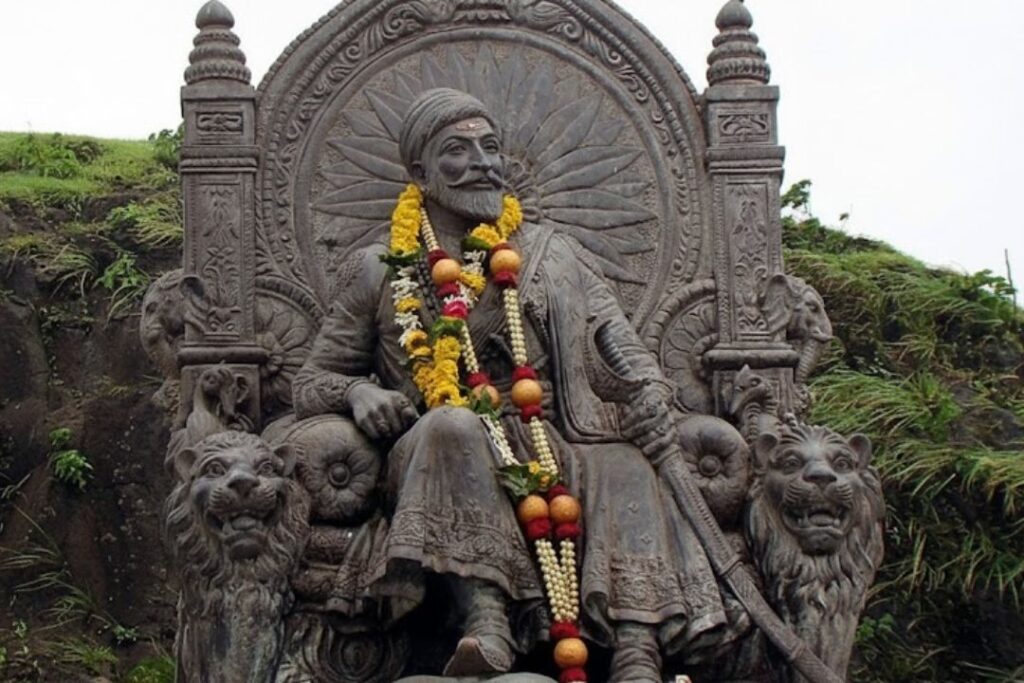
Chhatrapati Shivaji Maharaj’s life stands as a remarkable example of leadership, determination, and nation-building. From a small jagir in the Deccan, he built an empire that challenged the might of the Mughals and sowed the seeds of Indian self-governance.
His vision of Hindavi Swarajya—rule of the people, for the people—remains one of the most powerful ideas in Indian history. His name endures not just as a king, but as a timeless symbol of courage and pride.
To know more about Chhatrapati Shivaji Maharaj and inspiring stories of Indian heroes, visit and follow our Loktantra website blog today!