
Introduction
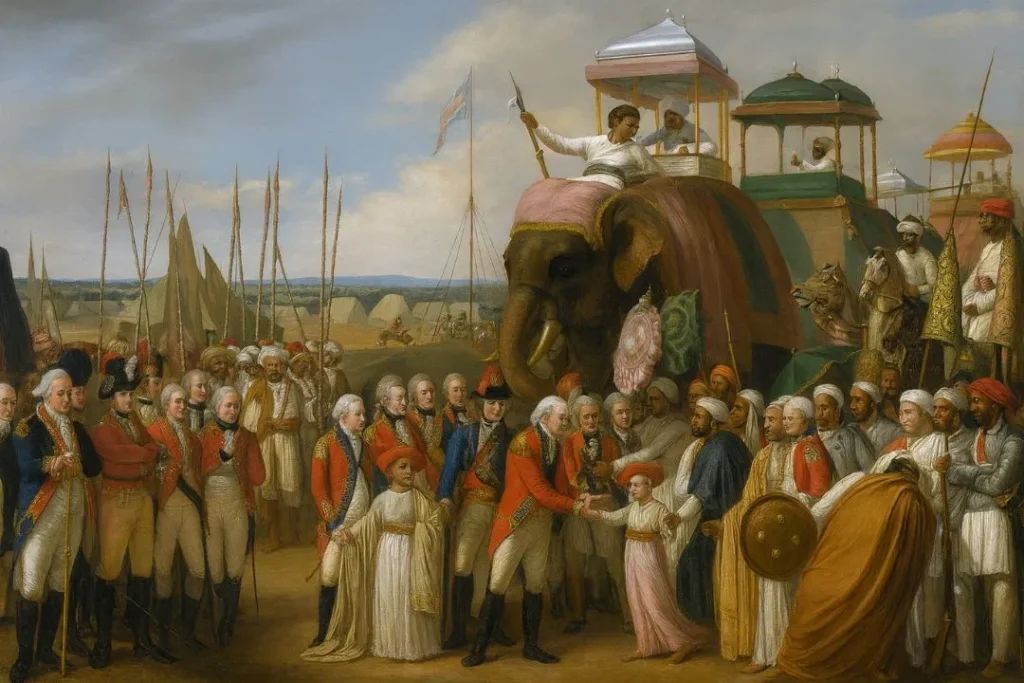
The arrival of the British in India is one of the most defining moments in world history. What began as a simple commercial venture eventually expanded into political domination and nearly two centuries of colonial rule.
To understand how this transformation happened, it is important to revisit the reasons and circumstances behind the British first stepping onto Indian soil.
5 Reasons Why the British First Landed on Indian Territory
1. The Origins of the East India Company
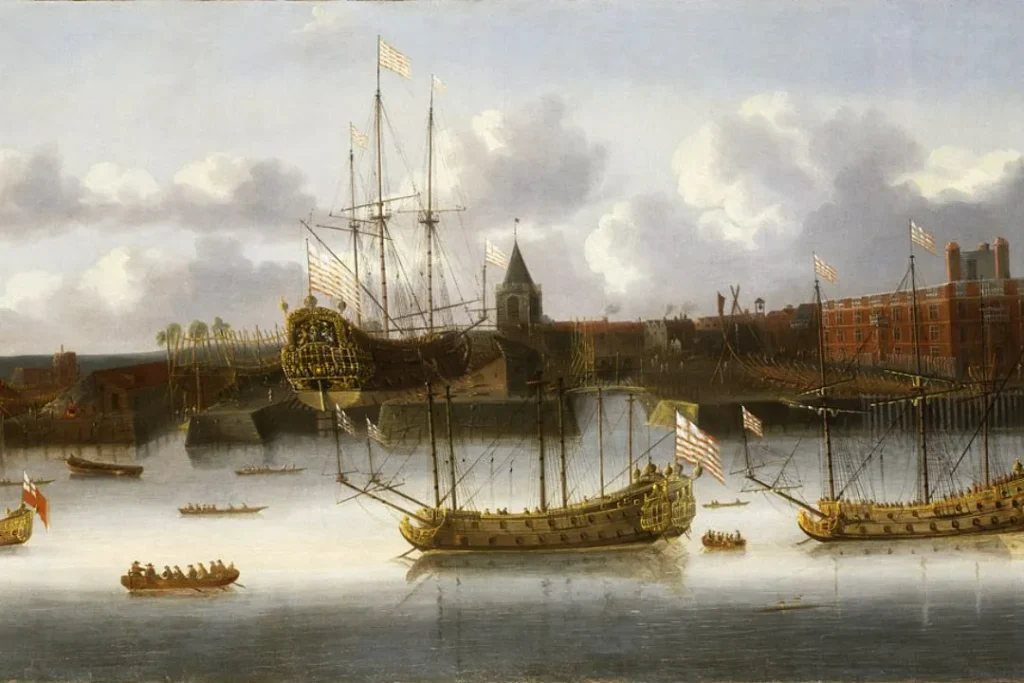
In 1600, Queen Elizabeth I approved the formation of the British East India Company, a private trading corporation founded by a group of English merchants.
During this period, European nations were engaged in fierce competition to access the rich markets of Asia. India, in particular, was renowned for its premium-quality spices, cotton textiles, silk fabrics, indigo, and handcrafted goods.
These products fetched extremely high prices in Europe, making India a highly desirable destination for trade.
The British, noticing the wealth and commercial potential of the Indian subcontinent, were eager to enter this lucrative market. Their primary intention was not political control but to gain trading privileges that would help them compete with existing European powers.
2. The First Landing at Surat
The British officially set foot in India on 24 August 1608, arriving at the bustling Mughal port of Surat in present-day Gujarat.
Surat was one of the most active trading hubs of the Mughal Empire, visited by merchants from Arabia, Persia, Africa, and Southeast Asia.
For the British, this port offered the perfect gateway to begin commercial operations.
Their early days in India were far from easy. The Portuguese, who had already established a strong presence along India’s western coastline, resisted British attempts to enter the market.
Despite this rivalry, the British continued to negotiate with the Mughal court. By 1613, Emperor Jahangir granted the East India Company permission to set up their first trading post or “factory” in Surat.
This marked the beginning of the Company’s permanent presence in India.
3. Expansion Beyond Commerce
Although the British entered India as traders, their ambitions quickly expanded. To protect their commercial interests, they began strengthening their military presence.
This shift was partly driven by competition with other European powers such as the Dutch and the French, who were also active in the Indian Ocean region.
The East India Company gradually established major settlements in:
- Madras (Chennai)
- Bombay (Mumbai)
- Calcutta (Kolkata)
These cities evolved into administrative and commercial centers, enabling the Company to control trade routes and expand its influence.
The turning point came with the Battle of Plassey in 1757, where the Company defeated the Nawab of Bengal.
This victory marked the beginning of British political dominance in India, transforming the East India Company from a trading corporation into a territorial power.
4. Why the British Came to India: Key Factors
a) Enormous Trade Opportunities
Indian goods were in huge demand across Europe. The profit margins were high, making India one of the most valuable markets for foreign traders.
b) Rich Natural and Human Resources
India offered fertile land, abundant raw materials, skilled craftsmen, and a vast consumer base—an ideal environment for British commercial growth.
c) Strategic Maritime Position
India’s location along major sea routes gave the British access to the wider Asian market and strengthened their naval influence.
d) Decline of Central Authority
The weakening of the Mughal Empire created political instability, which the British cleverly exploited through diplomacy, alliances, and military strategy.
e) Military Superiority
British naval power, disciplined soldiers, advanced artillery, and better organizational structure helped them overpower regional Indian kingdoms.
5. Long-Term Impact of Their Arrival
The British arrival brought long-lasting changes to India. Economically, the Company altered trade patterns to benefit Britain’s industries. Socially, Western education and legal systems reshaped Indian society. Politically, the Company laid the foundations of a centralized administrative structure that continued even after independence.
Conclusion

The British first came to India with purely commercial intentions, but the vast wealth of the subcontinent, combined with political opportunity and military strength, encouraged them to expand their ambitions.
Their landing in Surat in 1608 marked the beginning of an era that would profoundly influence India’s future. What started as a trade mission gradually evolved into full-scale colonial control, leaving an impact that still shapes India today.
For more powerful stories from India’s past & deep-dive history blogs, stay connected. Follow Loktantra for accurate facts, rich insights, and timeless historical knowledge.