
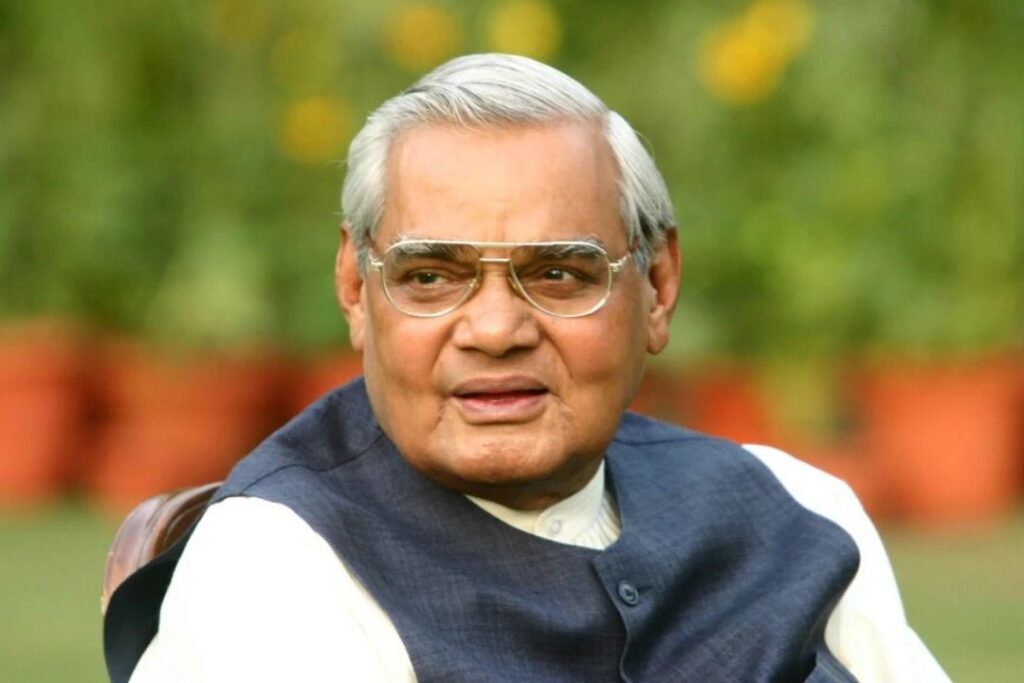
Early Life and Background
Atal Bihari Vajpayee was born on 25 December 1924 in Gwalior. Raised in a disciplined and culturally rooted family, he developed an early interest in literature, poetry, and public affairs. His formative years coincided with India’s freedom movement, which deeply influenced his political thinking.
Vajpayee was drawn toward nationalism and public service during his youth. His ability to express ideas through words made him stand out among his peers, and he soon became active in political organizations aligned with national development.
Political Rise
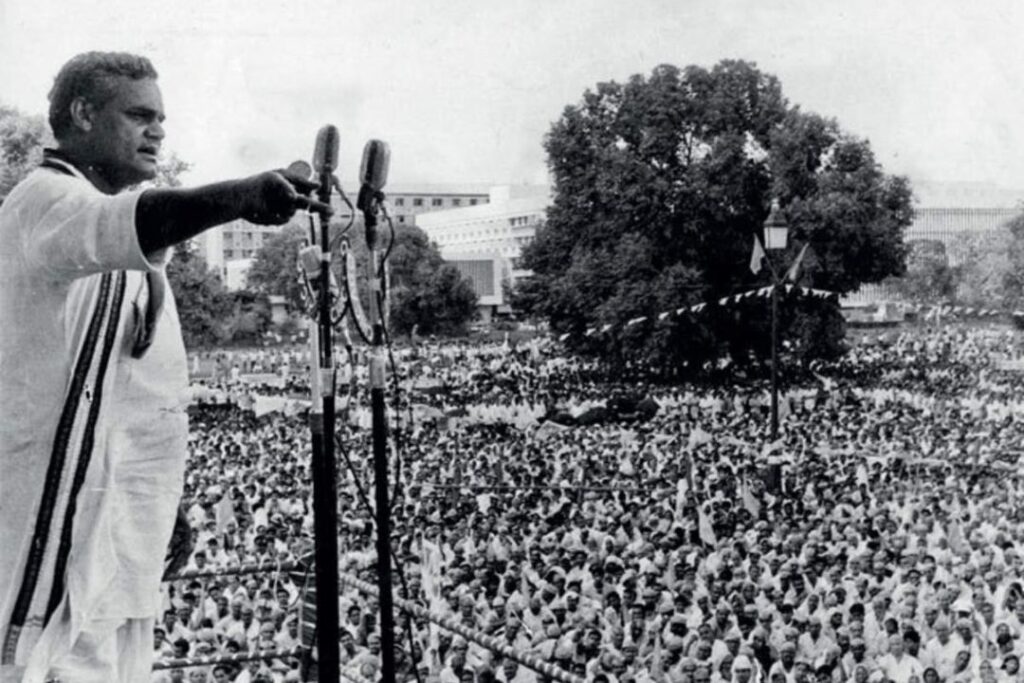
Vajpayee entered Parliament in the 1950s and gradually emerged as a powerful orator. He was respected across party lines for his balanced views and dignified conduct. Even political opponents acknowledged his commitment to democratic values and constructive debate.
Over decades, he played a key role in shaping the Bharatiya Janata Party as a national political force. His leadership helped expand the party’s appeal beyond ideological boundaries.
Prime Ministership
Atal Bihari Vajpayee served as Prime Minister of India three times, with his most stable tenure from 1999 to 2004. During this period, India witnessed significant developments in infrastructure, foreign policy, and economic reform. Projects related to highways and connectivity received special attention.
In foreign relations, Vajpayee emphasized dialogue while protecting national interests. His leadership during challenging geopolitical moments reflected a combination of firmness and restraint. He believed that strength and peace could coexist.
Leadership Style and Values
Vajpayee’s leadership style was marked by humility and consensus-building. He valued parliamentary traditions and encouraged respectful discussion. His poetic nature added emotional depth to his public speeches, making them memorable and impactful.
He believed that governance should balance economic progress with social responsibility. His policies reflected a long-term vision rather than short-term political gain.
Legacy
Atal Bihari Vajpayee is remembered as a statesman who elevated political discourse in India. His life demonstrates that leadership rooted in values, patience, and inclusiveness can leave a lasting mark on a nation’s democratic journey.
Conclusion
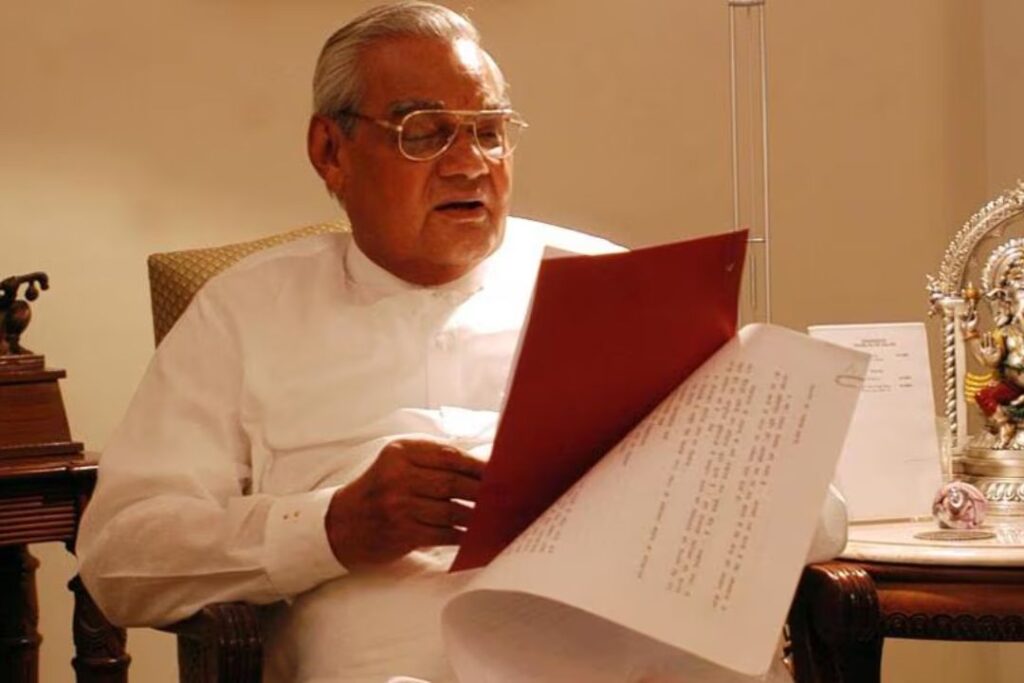
Atal Bihari Vajpayee’s life stands as a shining example of principled leadership, democratic values, and inclusive governance.
As a visionary statesman, he combined firmness with compassion, poetry with politics, and dialogue with determination.
His contributions to India’s political culture, infrastructure growth, and foreign policy continue to inspire generations and set a benchmark for dignified leadership.
To Read More Biographies about legendary leaders, freedom fighters, and influential personalities who shaped history, Click Here and explore inspiring stories of leadership and courage.